How Soccer’s Handball Rule Can Change an Attacking Route
See how soccer’s handball rule can change an attacking route, shaping where a player receives, how teammates support the move, and what happens next.
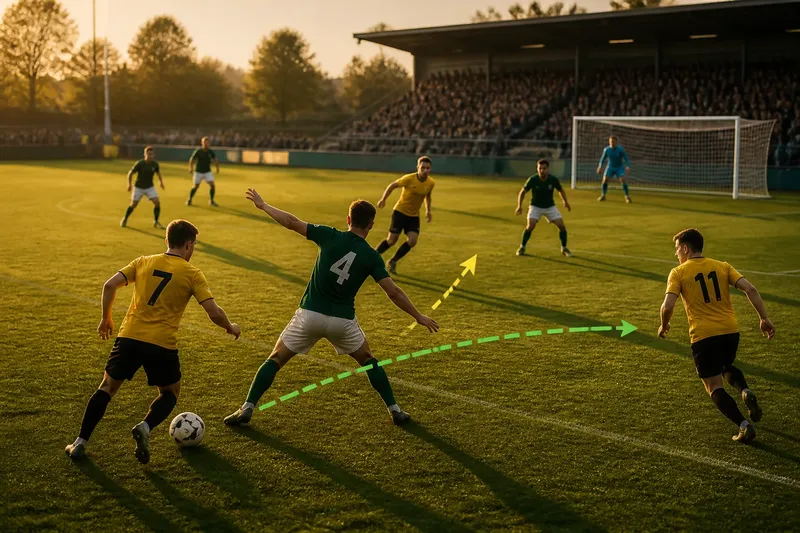
A forward cuts inside to meet a pass, but a defender’s arm blocks the lane. Soccer’s handball rule can change an attacking route before contact happens: the ball carrier may switch the pass wide, while the forward continues toward a different receiving space. The referee judges any resulting handball under the rules for that competition.
To understand the route, follow the ball, the players’ movements, and the next action in sequence. Handball is not simply any contact between the ball and an arm; the circumstances and the applicable rule wording matter.
How can the handball rule change an attacking route?
The rule can shape a route by changing which passing lane looks useful and which receiving action seems safe. If a defender reaches into a lane, an attacker may choose to pass around that space rather than send the ball through it, while a teammate adjusts their run to meet the new pass.
That is a tactical response, not a ruling in advance. A referee decides whether an offence occurred after considering the relevant contact and context; players make choices while the move is unfolding.
Say an invented team has possession near the edge of the penalty area. A defender extends an arm across the direct lane to a forward cutting inside, so the ball carrier instead passes toward a teammate moving along the outside; the observable result is a wider receiving route, although the referee still assesses any arm contact on its own merits.
What does the referee consider?
Contact with a hand or arm does not by itself settle the decision. The referee considers the player’s action and position, including whether the arm’s placement is justified by the movement or makes the body unnaturally bigger under the applicable rules.
The consequences can also differ between an attacking player and a defender. In certain attacking situations, an offence can apply without deliberate handling, particularly if the player scores or immediately creates a scoring opportunity. Competition rules and editions can affect the precise application, so refer to the rules governing the match.
How do you follow the route through a handball decision?
Start with the moment of contact, then trace what happened before and after it. This helps separate the referee’s judgment from the tactical choices that followed.
- Identify the player: If the contact involves an attacker, consider the attacking-handball provisions; if it involves a defender, assess the defender’s action under the relevant handball wording.
- Observe the arm’s position: If the arm appears to reach into the ball’s path, consider whether the movement supports that reading; if it follows a turn or balance movement, keep that context in view.
- Check the available lanes: If a clear alternative lane is open, the attacker may redirect the pass; if defenders close that route, the ball carrier may need to retain possession or choose another action.
- Follow the next touch: If the contact is followed by control, a pass, or a shot, include that sequence in your understanding; if play moves elsewhere, do not assume the contact determined the attack.
- Separate the result from the ruling: If the move ends in a goal or chance, that outcome alone does not establish an offence; if the referee stops play, consider the contact and rule basis rather than the outcome alone.
- Check the match rules: If the competition provides specific guidance, use it to interpret the decision; if the rule edition is unknown, avoid treating a general explanation as a definitive ruling.
What questions help explain the attacking route?
Does every touch on an arm count as handball?
No. The decision depends on the action and circumstances, not contact alone. The referee applies the relevant wording to the sequence.
Can an attacker commit handball without deliberately handling the ball?
Yes, certain attacking situations can result in an offence without deliberate handling, especially when the player scores or immediately creates a scoring opportunity. The applicable rule edition and match context matter.
Does an arm’s position always make the body unnaturally bigger?
No. The referee considers whether the arm position is justified by the player’s movement. A still image of the arm cannot settle that question by itself.
Why might an attacker choose a different receiving route?
A defender’s position, an available passing lane, and the next intended touch can all make one route preferable to another. The handball rule may inform those choices, but it does not prescribe a particular run.
What is not worth judging from one frame?
It is not worth deciding a handball call from the apparent size of an arm in a single paused image. A frame can show where the arm was, but not reliably how the player moved into that position or what happened next.
To connect the ruling to the attack, trace the contact, the player’s movement, and the next meaningful action, then note how the attackers changed their route. That sequence shows how soccer’s handball rule can change an attacking route without confusing a tactical adjustment with the referee’s decision.