A First Test Match at Home: Follow the Changing Sessions
A Test match viewing plan helps you follow each session’s changing rhythm, notice what breaks shift, and return to play without losing the thread.
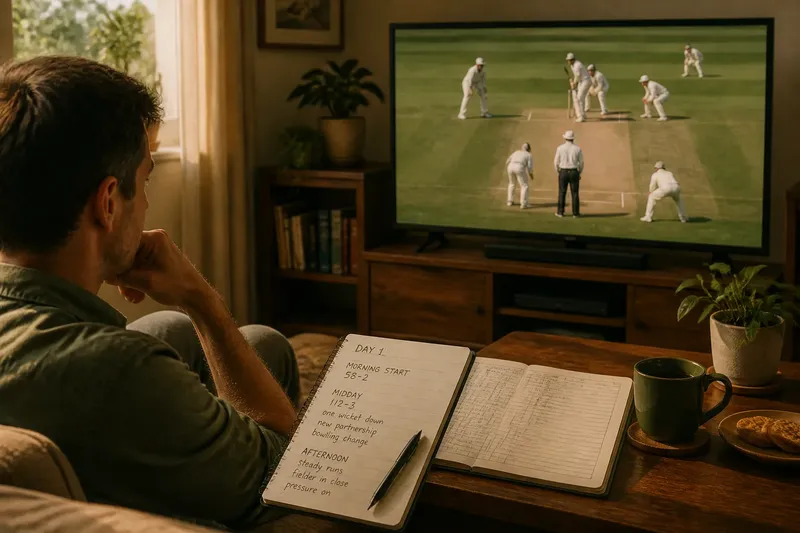
On a quiet Saturday morning, you turn on a Test match and see the field spread around a batter, with a new ball still shiny in the bowler’s hand. A Test match viewing plan built around sessions helps you follow the day’s changing rhythm, especially when play pauses and resumes. Instead of trying to track every delivery, watch what each handover changes: the light, the players’ workload, the scoreboard, and the choices on the field.
What does a session tell you about the day?
A Test match is played over several days, with each day’s scheduled play divided into sessions separated by breaks. The exact timetable can vary, but the familiar pattern is a morning session, a midday session, and an afternoon session. A session is more than a block on the schedule: it gives players and viewers a natural point to take stock.
At the start of a session, ask what the team batting needs and what the bowling side is trying to make happen. A team may be protecting wickets, building a lead, or scoring quickly; the fielding side may be seeking a breakthrough or trying to contain runs. Those aims can change as the match develops, so treat each resumption as a fresh question rather than a continuation you must remember ball by ball.
Keep the scorecard within reach, but focus on three details: the score and wickets, which batters are in, and who is bowling. This small snapshot is enough to orient you after a break. You do not need to memorize every over or infer a grand strategy from one unusual delivery.
What changes at a handover?
A handover is the pause between sessions, when players leave the field and later return. It is a useful viewing boundary because it invites comparison: what was the situation before the break, and what is different now? The score may have moved, a batter may have been dismissed, or a new bowler may be taking the ball.
Notice the field as well as the score. A captain might place more fielders near the bat to press for a wicket, or spread them out to limit scoring. A bowler’s change of end, a fresh spell, or a change in the ball’s condition can also alter the contest. These are clues, not promises; a field setting suggests an intention but does not tell you exactly what will happen.
Breaks also make the match easier to watch at home. You can step away, check the scorecard, and return at a clear reset point. What is not worth the effort is keeping a minute-by-minute record: a brief note about the score, wickets, and one noticeable change will usually preserve the thread.
How can you follow one invented match through the day?
Imagine you tune in for a hypothetical Test match as the morning session begins. The batting side is 58 for 2, with two established batters at the crease, and the opening bowlers are sharing the work. You write down that starting point, then watch for changes in wickets, bowling, and field placement rather than trying to predict the result.
At the first handover, suppose the score has reached 112 for 3. One batter has been dismissed, a new batter has arrived, and the captain has brought a bowler on from the other end. Your note might read: “One wicket down; new partnership; bowling change.” That line captures the session’s shape without turning your viewing into bookkeeping.
During the next session, imagine the new pair settle in and the batting side adds runs, but the fielding captain moves a fielder closer to the bat. At the next pause, compare the scene with your earlier note. The batting side has gained ground, while the tighter field signals renewed pressure; neither detail alone determines which side is ahead in the larger match.
Suppose play resumes for the final session with a different bowler and the same close-in fielder still in place. You check the scorecard, identify who is batting, and watch whether the field changes after a boundary or a quiet stretch. By the end of this invented day, your notes show a sequence: an early wicket, a steadier partnership, then a deliberate attempt to create pressure. The result is not simply a score; it is a readable account of how the contest shifted.
What should you notice as play resumes?
Use a short reset routine at each handover. Check these details in order:
- Score and wickets: Record the current score and how many batters are out; this tells you how much of the innings has been used.
- Batters at the crease: Identify who is batting and whether one has just arrived; a new batter often faces a different immediate challenge from an established partner.
- Bowler and end: Note who starts the session and from which end; a change can reveal how the captain wants to use the available bowlers.
- Field placement: Look for close fielders, a deep boundary fielder, or a visible adjustment; connect the arrangement to the kind of pressure the fielding side may be seeking.
- Match situation: Check the innings and any target or lead shown on the broadcast; the same scoring pace can mean different things at different stages.
- Conditions on return: Notice whether the light, weather, or playing surface appears different; these details can shape the feel of the session without explaining every outcome.
Pick one change to follow once play restarts. If the captain has placed a fielder near the bat, see whether the bowler attacks that area; if a new batter has arrived, notice how they begin. A single question keeps your attention focused while leaving room to enjoy the match.
Which session questions help a new viewer?
Why are there breaks during a Test match?
Sessions divide the day into planned periods of play, with breaks that give players time away from the field and viewers a convenient place to pause. They also create natural moments to assess how the innings and tactics have changed.
Does a session always end at the same time?
The schedule sets the intended periods, but interruptions such as weather or other delays can affect the day’s play. Follow the broadcast’s current schedule rather than assuming each session ends at a fixed moment.
What should I write down during a break?
Note the score, wickets, batters at the crease, and one change in bowling or field placement. Those details make it easier to rejoin without needing a complete delivery-by-delivery record.
Does a team’s session result decide the match?
No single session settles a Test match; the match unfolds across innings and days. A session can shift momentum or create a useful position, but its meaning depends on the wider score and remaining play.
How do the day’s customs shape home viewing?
Test cricket has familiar pauses that make the long day more manageable, but the atmosphere can differ from one ground and broadcast to another. Listen for the presenter’s explanation when play stops, and notice how the crowd’s sound changes as players leave and return. These small rituals mark time without requiring specialist knowledge.
Use the session boundaries to choose your level of attention. You might watch closely for the opening overs after a break, then keep the scorecard visible while doing something else. If you return to the screen mid-session, orient yourself with the same compact snapshot: score, wickets, batters, bowler, and field.
For a first Test match at home, the most useful habit is to compare the moments before and after each handover. That simple Test match viewing plan turns a long day into a series of understandable shifts, while leaving the game’s uncertainty intact. Keep one note for each session, and the match will tell its story in pieces you can follow.